
Dostęp do tego artykułu jest płatny.
Zapraszamy do zakupu!
Po dokonaniu zakupu artykuł w postaci pliku PDF prześlemy bezpośrednio pod twój adres e-mail.
Podwójne zęby środkowe szczęki w uzębieniu mieszanym – leczenie chirurgiczne
Bartłomiej Szkutnik, Agata Gębala, Ewa Tomaszewska, Marcin Metlerski
Streszczenie
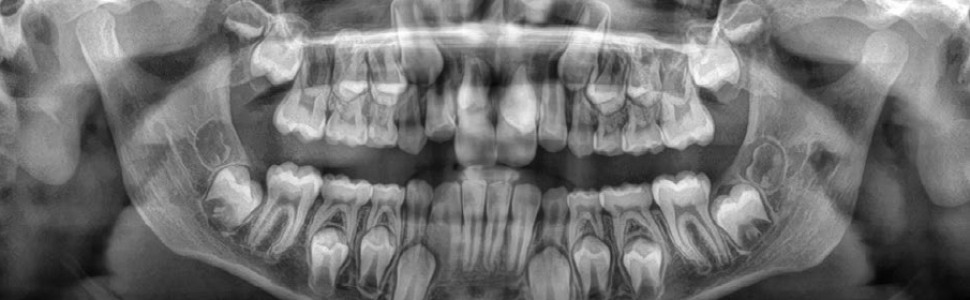
Najczęstszą występującą formą zębów nadliczbowych jest mezjodens. Podwójne zęby środkowe występują niezwykle rzadko. Praca prezentuje opis przypadku występowania dwóch mezjodensów wraz z poszczególnymi etapami leczenia chirurgicznego u pacjenta bez chorób towarzyszących oraz negatywnym wywiadem rodzinnym w kierunku występowania zębów nadliczbowych. Mezjodensy były przyczyną okresowych dolegliwości bólowych oraz stłoczeń w odcinku przednim. W pracy przedstawiono etapy chirurgicznego usunięcia zębów.
Hasła indeksowe: mezjodens, mnogie zęby nadliczbowe.
Double maxillary mesiodenses in mixed dentition – surgical treatment
Abstract
The most common form of supernumerary teeth is the mesiodens. Double mesiodentes occur much less frequently. This paper presents a case report of two mesiodentes and the stages of surgical treatment in a patient without systemic diseases and with negative family history of supernumerary teeth. Mesiodentes caused intermittent pain and crowding in the anterior maxilla. The stages of surgical removal of the teeth are presented.
Keywords: mesiodens, multiple supernumerary teeth.
Piśmiennictwo:
- Primosch RE. Anterior supernumerary teeth-assessment and surgical intervention in children Pediatr Dent. 1981; 3(2): 204-15.
- Rajab LD, Hamdan MA. Supernumerary teeth: review of the literature and a survey of 152 cases. Int J Paediatr Dent. 2002; 12(4): 244-54.
- Alberti G, Mondani PM, Parodi V. Eruption of supernumerary permanent teeth. Eur J Paediatr Dent. 2006; 7(2): 89-92.
- Gallas MM, García A. Retention of permanent incisors by mesiodens. Br Dent J. 2000; 188(2): 63-4.
- Fernandez-Montenegro P, Valmaseda Castellón E, Berini Aytés L i wsp. Retrospective study of 145 supernumerary teeth. Med Oral Patol Oral Cir Bucal. 2006; 11(4): E339-44.
- Van Buggenhout G, Bailleul-Forestier I. Mesiodens. Eur J Med Genet. 2008; 51(2): 178-81.
- Olczak-Kowalczyk D. Zaburzenia liczby i budowy anatomicznej zębów. W: Olczak-Kowalczyk D, Szczepańska J, Kaczmarek U. Współczesna stomatologia wieku rozwojowego. Wyd. I. Med Tour Press International; 2017: 138-140.
- Ray D, Bhattacharya B, Sarkar S i wsp. Erupted maxillary conical mesiodens in deciduous dentition in a Bengali girl – a case report. J Indian Soc Pedod Prev Dent. 2005 Sep; 23(3): 153-5.
- Ferrés-Padró E, Prats-Armengol J, Ferres-Amat E. A descriptive study. Med Oral Patol Oral Cir Bucal. 2009; 14(3): E146-52.
- Russell KA, Folwarczna MA. Mesiodens – diagnosis and management of a common supernumerary tooth. J Can Dent Assoc. 2003; 69(6): 362-366.
- Asaumi JI, Shibata Y, Yanagi Y i wsp. Radiographic examination of mesiodens and their associated complications. Dentomaxillofac Radiol. 2004 Mar; 33(2): 125-7.
- Mallineni SK, Nuvvula S. Management of supernumerary teeth in children: A narrative overview of published literature. J Cranio Max Dis. 2015; 4: 62-68.
- Omer RS, Anthonappa RP, King NM. Determination of the optimum time for surgicalremoval of unerupted anterior supernumerary teeth. Pediatr Dent. 2010; 32(1): 14-20
- Maddalone M, Rota E, Amosso E i wsp. Evaluation of Surgical Options for Supernumerary Teeth in the Anterior Maxilla. Int J Clin Pediatr Dent. 2018 Jul-Aug; 11(4): 294-298.
- Shih WY, Hsieh CY, Tsai TP. Clinical evaluation of the timing of mesiodens removal. J Chin Med Assoc. 2016 Jun; 79(6): 345-350