
Dostęp do tego artykułu jest płatny.
Zapraszamy do zakupu!
Po dokonaniu zakupu artykuł w postaci pliku PDF prześlemy bezpośrednio pod twój adres e-mail.
Zofia Stefanik, Zuzanna Szendera, Jakub Jakimów, Stefan Baron
Streszczenie:
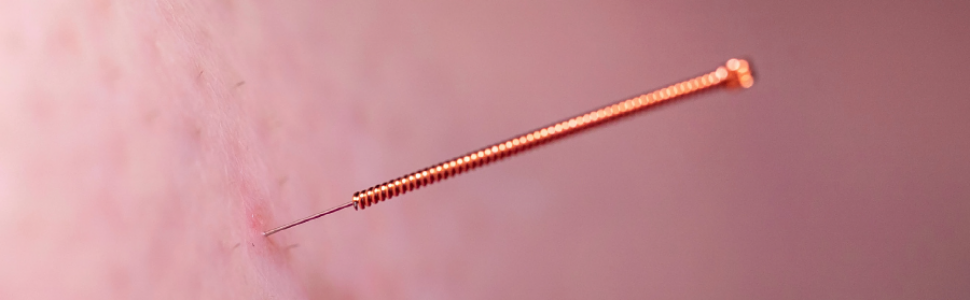
Suche igłowanie (dry needling, DN) jest szeroko stosowane jako skuteczna terapia w bólu i dysfunkcjach układu mięśniowo-szkieletowego. Metoda ta polega na wprowadzaniu cienkich igieł w punkty spustowe lub napięte pasma mięśniowe w celu złagodzenia bólu, przywrócenia prawidłowej funkcji mięśni oraz wsparcia procesu gojenia. Mechanizmy działania suchego igłowania wciąż są przedmiotem badań, a różne teorie wskazują, że metoda ta może wpływać m.in. na zmniejszenie napięcia mięśniowego, poprawę krążenia krwi oraz stymulację procesów gojenia w obrębie tkanek. Jedno z najczęstszych zaburzeń, w których suche igłowanie wykazuje satysfakcjonujące efekty, to ból mięśniowo-powięziowy (muscular trigger point, MPS), charakteryzujący się obecnością hiperalgetycznych punktów spustowych w mięśniach. Tego typu punkty spustowe są odpowiedzialne za ból, ograniczony zakres ruchu i dysfunkcje. Suche igłowanie wykazuje skuteczność w redukcji bólu i poprawie zakresu ruchu u osób cierpiących na MPS, zwłaszcza w górnej części ciała. Celem niniejszego artykułu jest przedstawienie mechanizmów działania suchego igłowania na podstawie informacji zawartych w piśmiennictwie. W artykule omawia się także wykonywanie tej techniki oraz potencjalne efekty terapeutyczne mogące wynikać z jej stosowania.
Hasła indeksowe: suche igłowanie (DN), ból mięśniowo-powięziowy (MPS), punkty spustowe, mechanizmy działania suchego igłowania
Abstract
Dry needling (DN) is a frequently employed treatment helpful against musculoskeletal pain and dysfunction. For pain alleviation, for the restoration of normative muscle function, as well as for the support of the tissue’s healing course, this procedure entails the insertion of slender needles into trigger points or tense muscle bands. Despite active inquiries into precise mechanistic pathways, diverse hypotheses posit that dry needling can diminish muscular tautness, augment perfusion, and incite localized tissue restoration. Frequently, dry needling attains propitious consequences regarding myofascial pain (MFP). This syndrome is typified through hyperalgesic trigger points within muscles. These trigger points give rise to pain, restricted movement range, and muscular impairment. In people afflicted with MFP, particularly within the upper body, dry needling improves range of motion and reduces pain. This essay endeavors to depict dry needling’s mechanism according to contemporary scholarly publications. It additionally explores the methodology of dry needling itself. Possible medicinal advantages might stem from that clinical usage.
Key words: dry needling (DN), myofascial pain syndrome (MPS), trigger points, mechanisms of dry needling
Piśmiennictwo
- Ay S, Evcik D, Tur BS. Comparison of injection methods in myofascial pain syndrome: a randomized controlled trial. Clin Rheumatol. 2010; 29(1): 19-23.
- Lavelle ED, Lavelle W, Smith HS. Myofascial trigger points. Med Clin North Am. 2007; 91(2): 229-239.
- Borg-Stein J, Simons DG. Focused review: Myofascial pain. Arch Phys Med Rehabil. 2002; 83(3 Suppl 1): S40-S47, S48-S49.
- Kietrys DM, Palombaro KM, Azzaretto E i wsp. Effectiveness of dry needling for upper-quarter myofascial pain: a systematic review and meta-analysis. J Orthop Sports Phys Ther. 2013; 43(9): 620-634.
- Hong CZ, Simons DG. Pathophysiologic and electrophysiologic mechanisms of myofascial trigger points. Arch Phys Med Rehabil. 1998; 79(7): 863-872.
- Perez-Palomares S, Oliván-Blázquez B, Arnal-Burró AM i wsp. Contributions of myofascial pain in diagnosis and treatment of shoulder pain: a randomized control trial. BMC Musculoskelet Disord. 2009; 10: 92.
- Simons DG, Travell JG, Simons LS. Myofascial pain and dysfunction: the trigger point manual. Volume 1: Upper half of body. 2nd ed. Philadelphia, PA: Lippincott Williams & Wilkins; 1998.
- Travell JG, Simons DG. Myofascial pain and dysfunction: the trigger point Manual. Volume 2: The lower extremities. Media, PA: Williams & Wilkins; 1992.
- Fricton JR, Kroening R, Haley D i wsp. Myofascial pain syndrome of the head and neck: a review of clinical characteristics of 164 patients. Oral Surg Oral Med Oral Pathol. 1985; 60(6): 615-623.
- Kalichman L, Vulfsons S. Dry needling in the management of musculoskeletal pain. J Am Board Fam Med. 2010; 23(5): 640-646.
- Skootsky SA, Jaeger B, Oye RK. Prevalence of myofascial pain in general internal medicine practice. West J Med. 1989; 151(2): 157-160.
- Bosque M, Margalef R, Carvajal O i wsp. Dry needling produces mild injuries irrespective to muscle stiffness and tension in ex vivo mice muscles. Pain Res Manag. 2022; 2022: 8920252.
- Chen JT, Chung KC, Hou CR i wsp. Inhibitory effect of dry needling on the spontaneous electrical activity recorded from myofascial trigger spots of rabbit skeletal muscle. Am J Phys Med Rehabil. 2001; 80(10): 729-735.
- Aguilera FJ, Martín DP, Masanet RA i wsp. Immediate effect of ultrasound and ischemic compression techniques for the treatment of trapezius latent myofascial trigger points in healthy subjects: a randomized controlled study. J Manipulative Physiol Ther. 2009; 32(7): 515-520.
- Jiménez-Sánchez C, Gómez-Soriano J, Bravo-Esteban E i wsp. Effects of dry needling on biomechanical properties of the myofascial trigger points measured by myotonometry: a randomized controlled trial. J Manipulative Physiol Ther. 2021; 44(6): 467-474.
- Pecos-Martín D, Montañez-Aguilera FJ, Gallego-Izquierdo T i wsp. Effectiveness of dry needling on the lower trapezius in patients with mechanical neck pain: a randomized controlled trial. Arch Phys Med Rehabil. 2015; 96(5): 775-781.
- Martín-Pintado-Zugasti A, Fernández-Carnero J, León-Hernández JV i wsp. Postneedling soreness and tenderness after different dosages of dry needling of an active myofascial trigger point in patients with neck pain: a randomized controlled trial. PM R. 2018; 10(12): 1311-1320.
- Furlan AD, van Tulder M, Cherkin D i wsp. Acupuncture and dry-needling for low back pain: an updated systematic review within the framework of the cochrane collaboration. Spine (Phila Pa 1976). 2005; 30(8): 944-963.
- Dommerholt J, Chou LW. Trigger point dry needling. J Man Manip Ther. 2010; 18(4): 200-206.
- Perreault T, Dunning J, Butts R. The local twitch response during trigger point dry needling: is it necessary for successful outcomes? J Bodyw Mov Ther. 2017; 21(4): 940-947.
- Hakim IK, Takamjani IE, Sarrafzadeh J i wsp. The effect of dry needling on the active trigger point of upper trapezius muscle: eliciting local twitch response on long-term clinical outcomes. J Back Musculoskelet Rehabil. 2019; 32(5): 717-724.
- Hsieh YL, Yang SA, Yang CC, Chou LW. Dry needling at myofascial trigger spots of rabbit skeletal muscles modulates the biochemicals associated with pain, inflammation, and hypoxia. Evid Based Complement Alternat Med. 2012; 2012: 342165.
- Tough EA White AR, Cummings TM i wsp. Acupunture and dry needling in the management of myofascial trigger point pain: a systematic review and meta-analysis of randomized controlled trials. Eur J Pain. 2009; 13(1): 3-10.
- Kietrys DM, Palombaro KM, Azzaretto E i wsp. Effectiveness of dry needling for upper-quarter myofascial pain: a systematic review and meta-analysis. J Orthop Sports Phys Ther. 2013; 43(9): 620-634.
- Quintner JL, Bove GM, Cohen ML. A critical evaluation of the trigger point phenomenon. Rheumatology (Oxford). 2015; 54(3): 392-399.